
Information in this section can be found under the following headings:
- Transition from Primary to Secondary School
- At Secondary School
- Support Group Meetings and Individual Learning Plans
- Teacher Assistants
- Special Provision
- Selecting Middle and Senior School Subjects
- Other Topics – would you like to contribute?
- Resources
- AFA produced pdf documents and video to download
- Other documents
- Useful website links
Transition from Primary to Secondary School
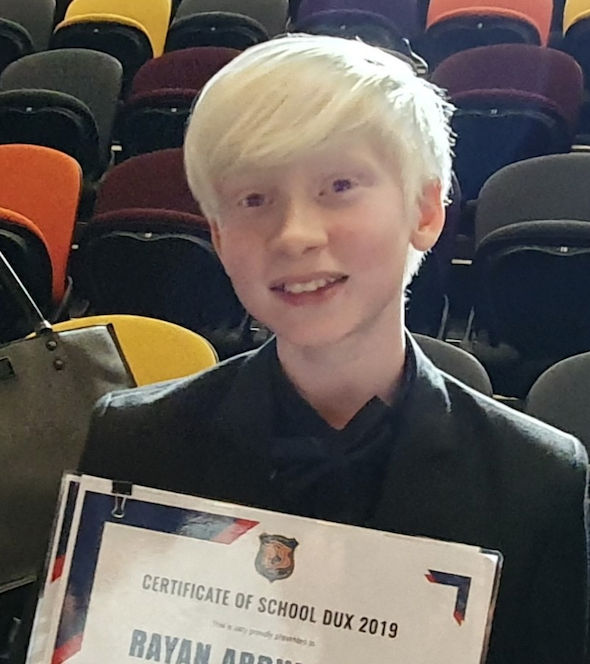
Preparation for this transition will generally begin in the final year of primary school. In most states there is a reassessment of eligibility for support programs at this level, with applications submitted by the Primary school. As the guidelines for eligibility do not change, your child should continue in the same category of support – unless their vision measurement has changed. Primary and secondary schools generally partner in extensive transition programs where students stay in the same education system (Government, Independent or Catholic). The visiting teacher will assist with the vision related elements of this transition.
The biggest change for your child is the move to individual subject teachers, often in different classrooms. Students no longer have one teacher overseeing their work and they need to be independent in the management of classwork, resources and personal belongings, as they follow a daily timetable to move around a sometimes much bigger school. This brings special challenges for the low vision child who can be supported by a team of people, including the Visiting Teacher (VT), Orientation and Mobility specialist (O&M), Occupational Therapist (OT) and parents and friends.
As with the transition to primary school, most states now have agreements with NDIS, so that providers visit both schools for additional sessions in developing life skills to support transition, funded by the NDIS.
Any plan for support would usually arise from Student Support Group discussions, to be included in the student’s individual learning plan (ILP/ELP) and also in their NDIS goals and plan (personal/life skills only). This may begin in the primary school with additional visits to the secondary school with an O&M trainer to learn their way around safely, or with the Visiting Teacher (VT), introducing the student to new assistive technology or software to be used. An environmental assessment of the secondary school classrooms and grounds should also take place to identify any safety issues and provide a report on how the school can meet student needs.
This may include provision of a locker at chest height on the end of a row, blinds in the classroom to reduce glare for a photophobic child, or line markings on steps and raised edges/drop offs, “high-vis” paint or tape on poles and other obstructions in the classroom or yard. Funds for this are available to all schools in order to meet disability standards.
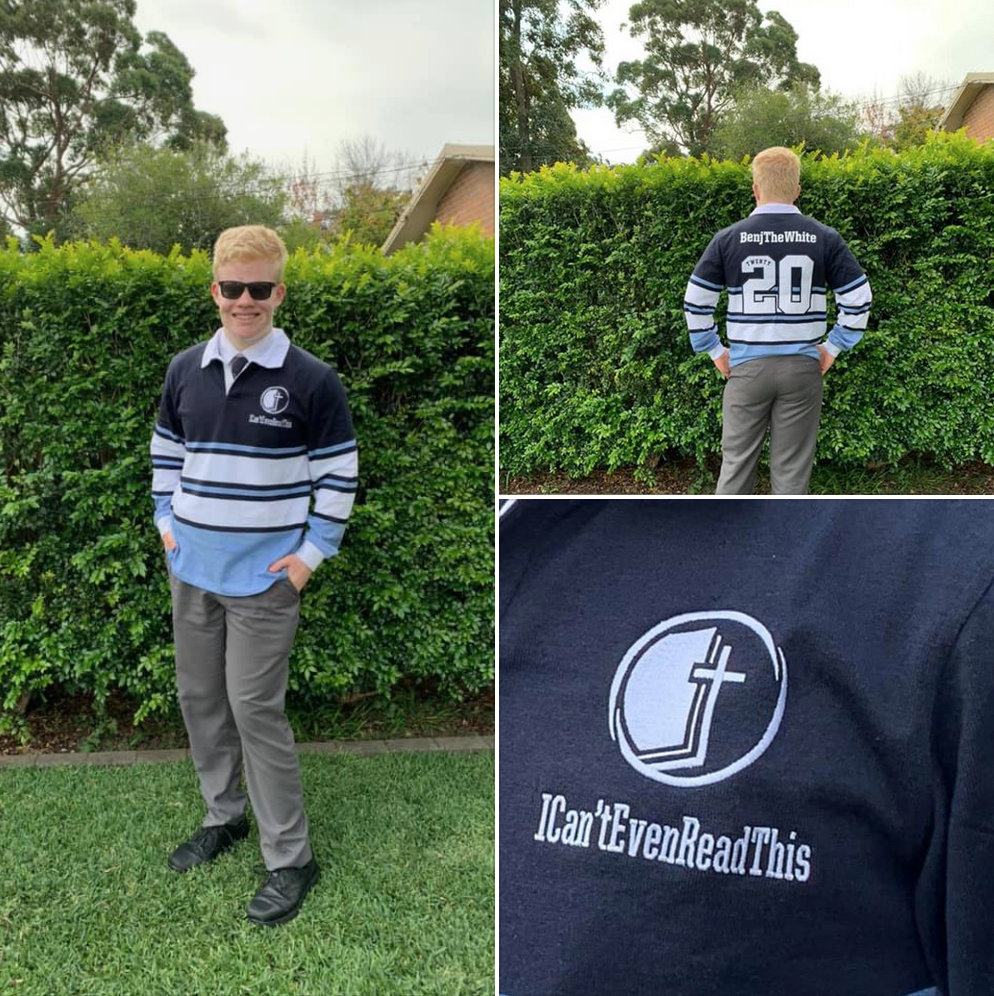
- “Year 7 was scary at the start, but Benj loved high school” (pdf) AFA member Danielle Gulliford talks about what supported her son.
- Top tip – Preparing for high school (pdf). AFA member Sarah Fenwick Mulcahy gives her top tip for year 7 transition.
At Secondary School
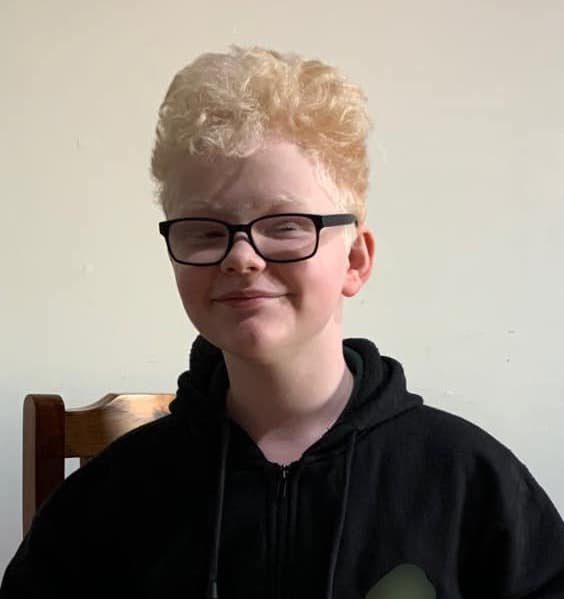
The journey through secondary school is one of developing a better knowledge of self, of how to become independent and yet know when to ask for assistance. Your child will learn more about their vision, when it works best, how to support it and when to rest as they undertake individual or extended studies. The development of study skills and time management will be crucial as they reach senior school, along with a determination that their vision will not limit them.
Students will often form different friendship groups and become more involved with the extended community through work experience, school excursions and community service programs. They will begin to discover career and post school options, especially if parents look at ways to expose them to a range of careers. Sighted children pick up on what different careers involve by watching people at work from an early age, something those with low vision can miss out on, unless special visits are arranged and/or the careers discussed with others or within the family. Seeking role models or mentors with low vision in a range of careers, will open their eyes to what is possible, as you will see in the pages on this site.
Support Group Meetings and Individual Learning Plans
These meetings and plans are just as important in secondary school as they are in primary schooling, but they will increasingly involve more engagement and participation by the student. Open communication between home and school, with increasing responsibility and independence by the student will be major factors in success.
The student must “own” their individual learning plan, actively working towards goals and being able to assess their progress – in many schools the feedback and reporting on progress in the final year (Year 12 or 13) is directed to the students and not to parents. Any meetings should include any specialists working with the child if possible and should always involve a review of individual progress against prior goals (increasingly becoming measurable) and the setting of revised or new goals.
Student Support Group Guidelines: this Victorian booklet can be used as a guide by teacher or parents from any state as it is based on national guidelines. This covers composition and operation of the support group, determining adjustments and developing personalised learning plans (PLP or ILP). It includes templates for getting to know the child, goal setting and recording achievement.
Teacher Assistants
In some schools one of the general teacher assistants (not assigned to a specific child) may be used to assist until the student has settled in and knows their way around. They may also be used in practical classes to ensure safety using equipment or chemicals (eg. woodwork or science) and on excursions during each year. Children who qualify for the higher level of support (visual acuity measured greater than 6/60) may be allocated an assistant for parts of the week, but this will reduce as the student develops and gains the required skills to work independently. In all cases the assistant is there to make sure accessible materials are provided and to work with the teacher to monitor how the child is managing with any activity. A teacher assistant’s role is not to replace the teacher or to complete some or all of the work and they should not sit next to the student in class, as this does not encourage the student’s independence and separates them from their peers. The teacher assistant may take some one-on-one sessions in order to hone or practice specific vision skills, or in using assistive technology, but the teacher is always the one responsible for the student’s learning and assessment.
Special provision
All states provide similar special provision for external examinations, based on Australian Education guidelines. The following statement is an example of policy from Victoria: “The underlying principle of the VCAA Special Provision Policy is to ensure that the most appropriate, fair and reasonable options are available for students to demonstrate their capabilities if their learning and assessment programs are affected by disability, illness, impairment or other circumstances.”
This will vary according to each child’s functional vision and may include additional time, rest breaks, enlarged text/graphic/picture worksheets, use of a computer or other assistive technology and in the case of a legally blind student may include a reader, scribe or use of Braille. If assessed as necessary, it should apply to all assessment, both internal and external, but may vary from subject to subject. When assessment protocol consistent with final years external assessment (eg VCE or VET in Victoria) is introduced during lower levels, it gives the student an opportunity to not only demonstrate their true capabilities, but also allows them to become used to those protocols (especially if a “reader” is allowed).
Special Provision for external assessment must be applied for and approved thorough the state’s examining authority with applications best made the year before the final certificate is commenced – eg. this may be in Year 9 if students take a certificate unit in Year 10. Check details with each school.
Selecting Middle and Senior School Subjects
Advice for low vision students will be the same as for their peers; selection should be consistent with their abilities and interests, keeping career pathways open. Students who have attempted and persevered with all compulsory subjects in the first 2 or 3 years, will not only develop more basic skills but will have a greater choices in the final years of secondary studies.
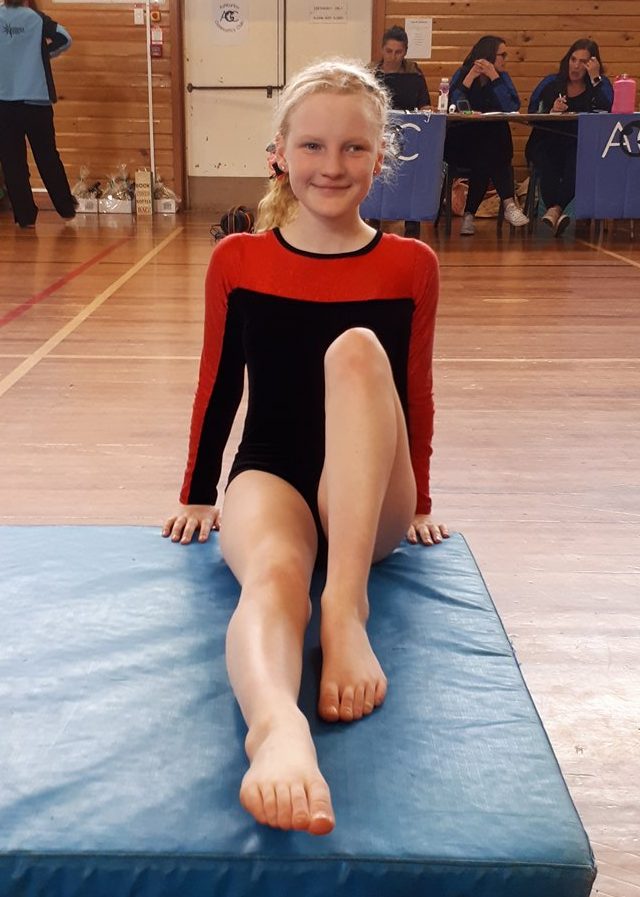
Students should look closely at the course outlines and meet with subject teachers to discuss individual accommodations for low vision. It is advisable to research which special provisions may be made for each subject at external certificate level to gauge which accommodations can be made for them in all year levels. For example, some physical education classes are more suitable than others when individual activities such as dance, martial arts, gymnastics and fitness activities are used, this avoiding units with fast paced ball sports if they prove too difficult for the student. Physical education and Recreation subjects at the senior certificate level are more about the human body and activity, than with the specific sports, so should not be discounted.
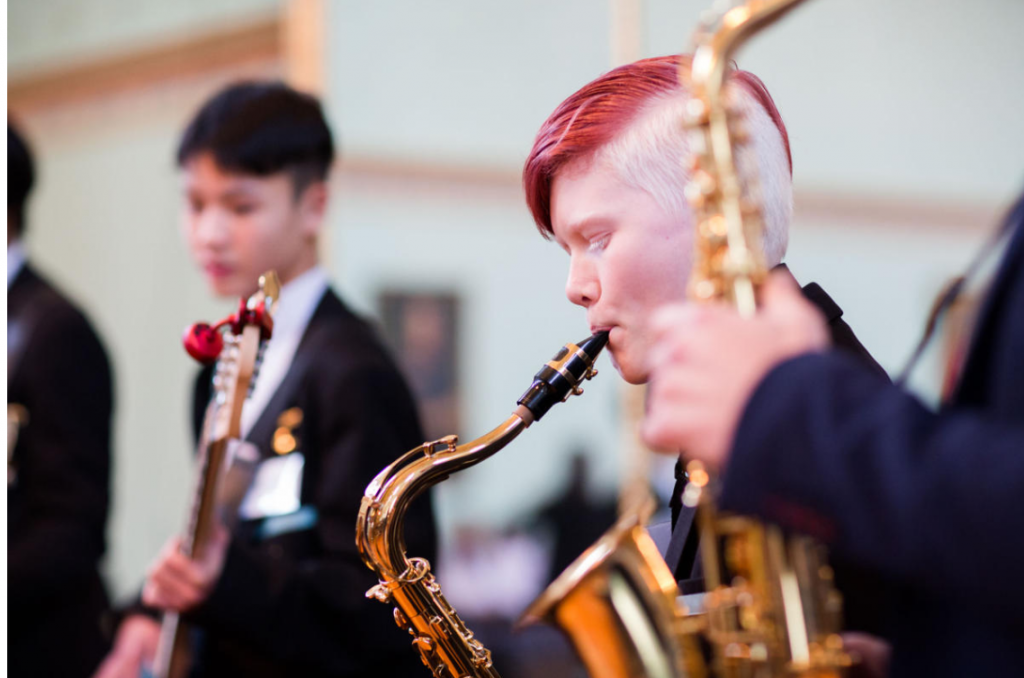
Many low vision students take science, art, music and performing arts subjects, going on to careers in the area. Everything of interest should be explored and nothing discounted due to low vision! Successful adults with albinism will tell you of the adaptations made to achieve their goals – keep the goals high, don’t lower the expectations!
Achieving in the final two years.
- Starting my VCE Years a video from Lucy (AFA teen member) on the strategies she has developed to overcome low vision at school.
- Succeeding in Senior School (pdf) How Benj meets the challenges in Secondary school and the assistive technology he uses. by AFA member, mum Danielle Gulliford (2020).
- How parents can help students in the senior years of school. (pdf) an article by Andrew Fuller.
Other Topics – would you like to contribute?
There are many other topics that can be included here and these will gradually be developed. We welcome contributions from teachers, current and past students or parents, or suggestions for links that you have found useful. Contact the AFA webmaster@albinismaustralia.org (with Website Content in the subject line) for information to be passed on to the website committee member currently working on content.
Also if you find broken links, please advise on the same email address.
Resources
AFA produced pdf documents and video to download
- Letter of Introduction to Year 11 Teachers – Thanks to AFA member Karen, whose letter is provided here to give other students an idea on how to form their own letter, introducing teachers to their own functional vision at school, to the resources they use and the accommodations that can support them.
- Parent’s Guide to School (PDF) – How can I support my child at school? This is an AFA produced document.
- General advice for teachers and parents of secondary students with albinism (PDF). This is an AFA produced document.
- Music for Children, Teens and Beyond (pdf) by PWA member Dr Barbara Williams PhD (in muisc).
- PE and Sport participation in Secondary (PDF) This AFA produced document looks at the effect of functional vision on physical activity and inclusive strategies for low vision.
- Additional information to give to the teacher once the child has settled in to class: (PDF) Once the teacher has had time to meet your child, you can give them this AFA produced document with more details on albinism and accommodations to support your child.
- Sun Protection Statement from the AFA (PDF) – helping you to explain the needs of your child in the playground or for the school to submit with funding applications for resources.
- Steps to Success: (from AFA 2017 Conference) Annette Godfrey-Magee (SVRC) provided an excellent presentation on the journey through the school years (P-12), identifying skills and behaviours to be achieved at each level by the low vision student.
Other documents
- Transition Competencies Checklist for Students (pdf) from Dr Karen Wolffe at the 2017 AFA Conference. Transition to Year 7 – use competencies 1 to 3 (and relevant points from 4 & 5). Transition to post secondary – use relevant compencies from 1-3 and all 4 to 10 competencies.
- Teacher Checklist for Students with Near Normal Vision – visual acuity 6/12 to 6/18. (pdf) by Probert and Skinner, Visiting Teachers for Vision Impaired (Vic).
- Student Support Group Guidelines: this Victorian booklet can be used as a guide by teacher or parents from any state as it is based on national guidelines.
- Educational Support for Students with Low Vision (PDF) this comes from the Statewide Vision Resource Centre (SVRC) with permission to reproduce.
- Guidelines on Accessible assessment (PDF) This document from Round Table on Information Access for People with Print Disabilities Inc. (Aust) is reproduced under the Creative Commons Attribution-Non-Commercial-No Derivative Works 3.0 Australia Licence.
- Introducing my self to teachers or lecturers – Tertiary or Senior Secondary: Templates from NOAH US (used with permission) for the student to introduce themselves to new teachers or lecturers.
- Ten ways to promote the natural genius in your child – (PDF) Andrew Fuller
- For Teachers – What is albinism – NOAH (PDF) This document is from NOAH (US) and used with permission.
- Can you see this? (PDF) This article in the “Paths to Literacy” (Perkins School for the Blind, US) by Laurie Hudson, gives teachers (and parents) a guide to the questions to ask in order to discover exactly what the child sees.
Useful Website links
- How I Learn – How I Learn empowers high-school age students with disability to share their unique learning and accessibility needs with their school. It supports students to develop their self-advocacy skills, setting them up for success at school and beyond. (Website from VisAbility WA)
- South Pacific Educators of Vision Impaired (SPEVI) – the SPEVI website serves as a portal, linking people (including parents) to information in the related fields of education, disability and vision impairment. https://www.spevi.net/
- Working with your child’s school and teachers – from the Australian Government’s education site
- To todays teachers part 2 by Blonde Whimsy. This 2012 article is still relevant today. What to expect and how you can help.
- Promoting conversation with your child: This is an interesting collection of conversation starters.
- NOAH (National (US) Organisation for Albinism and Hypopigmentation) This is an American site and while it has information specifically for that country, it is a good reference for families and teachers.
 Join us on Facebook