

Attending childcare or kindergarten will provide your child with a sound preparation for school and equip you with an understanding of how your child manages (or doesn’t) and how they can be supported in their education. Information is generally passed on from the Kindergarten to your school of choice and the process of applying for support in the school should begin during Term 4. However decisions about which school to attend will start much earlier, with applications for enrolment usually made in Term 1 or 2 the year before school. Enrolment at some independent (private) and catholic schools may have to be made soon after birth.
Further information is available below under these headings:
- Preparing for the start of school
- Selecting a school
- Orientation the term before beginning school
- Starting School
- The second year and beyond
- Resources for multiple year levels
Preparing for the start of school
Encourage your child to be inquisitive and ask questions, create and explore. Ensure their basic safety, but let them be free to try things and make mistakes. Work towards their independence in everything that peers of their age can do, have expectations that they will achieve tasks and skills – they may just take a little longer to learn. It is very tempting to do things for them, to allow them to do less because of their vision, but they learn more quickly and develop a more “can do” attitude if you encourage them to do things themselves, at their own pace.
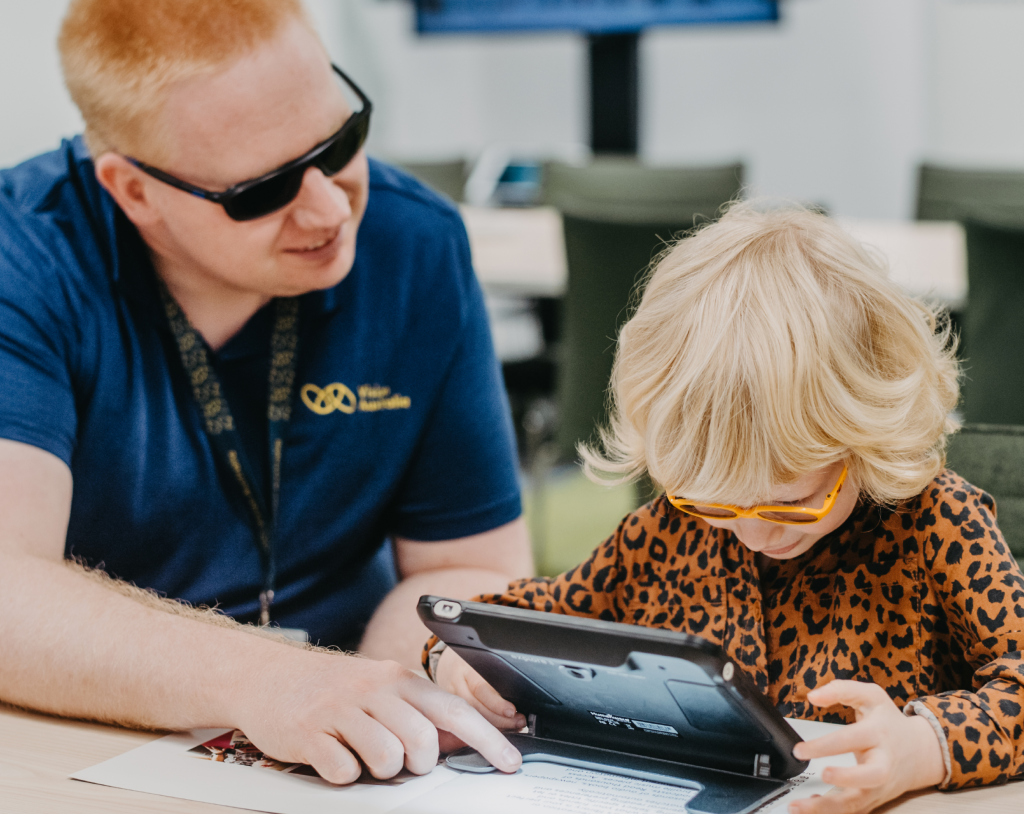
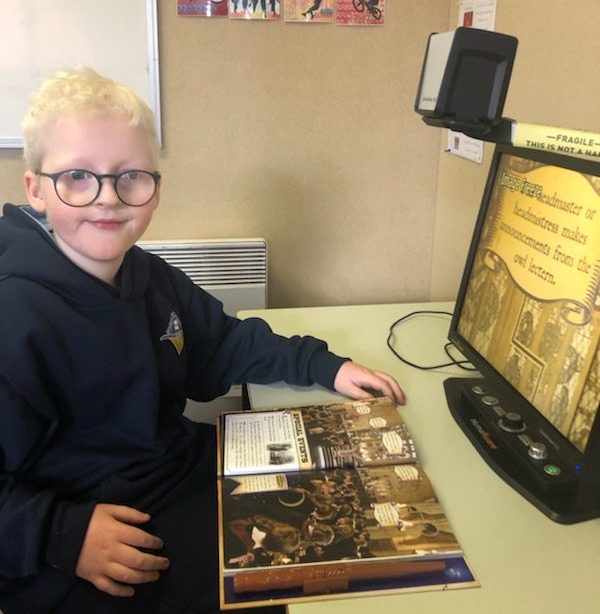
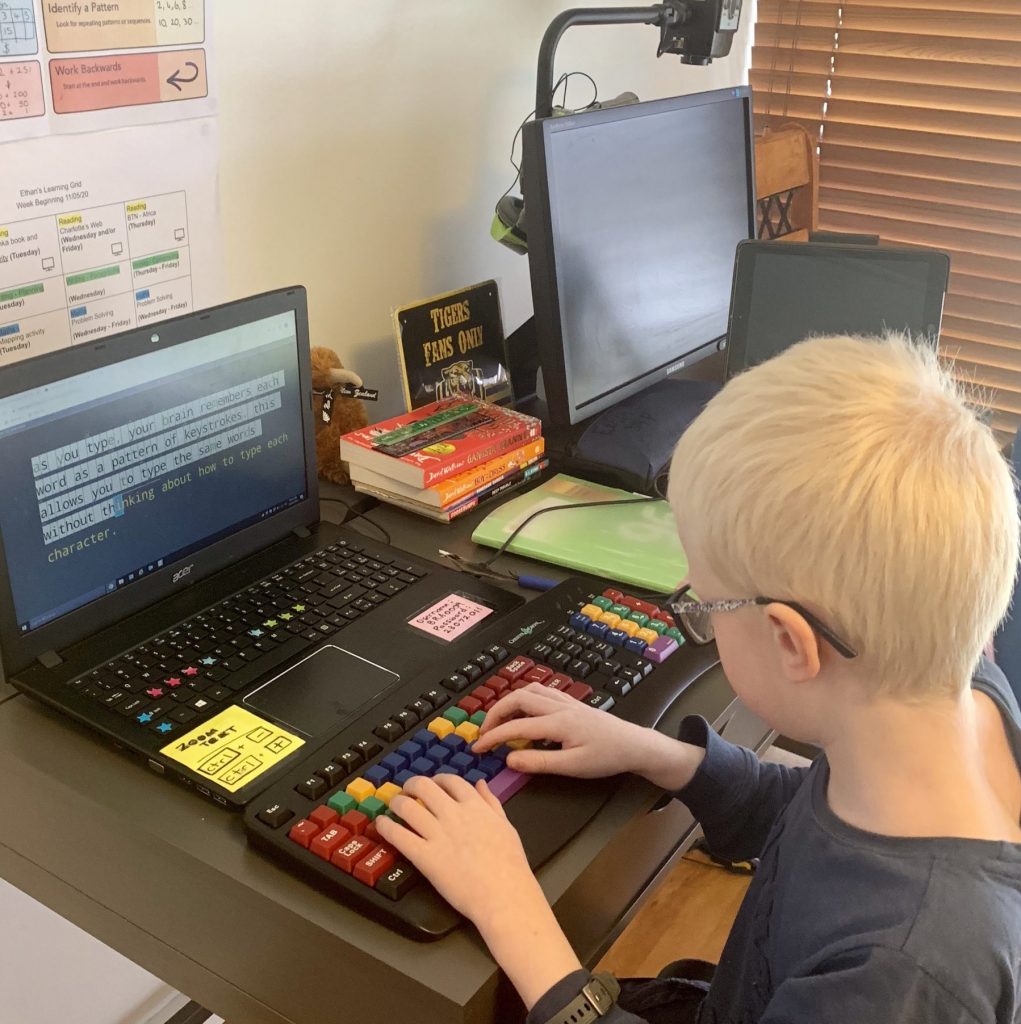
Connect with organisations or providers who may be a source of advice and practical assistance – you should have access to this through NDIS. You can include goals of “developing skills in preparation for school” in their plan. This can include orientation and mobility (O&M) training, cane use, the use of assistive technology for reading, hobbies and story telling (domes, electronic readers, magnifiers, CCTV’s), the development of basic movement skills and good study posture with an occupational therapist.
Other sighted children learn how to hold a pen, to climb, jump, skip, hop, throw, catch or hit by watching others, but many of our children cannot see this clearly and may need explicit teaching.
If possible also connect with other parents of children with low vision or albinism, to share information and give each other support (try our AFA facebook page). If you find you live close by another albinism family, try to meet up so that your child learns that they are not the only one with albinism – perhaps through AFA gatherings or conferences. Having a friend who understnds the frustrations and joys of low vision can be an immense assett, particulary when they reach teeenage years and need to unload their concerns sometimes.
- Preparing your child for school (pdf) an AFA prepared document.
Selecting a school
This can seem a daunting task, but the more you attend open days in the 2 or so years before, the more you will learn about each school and get a feel for what is likely just “publicity speak” and what actually happens there each day. Find out if the school has a nice balance between having high academic expectations and looking after the welfare of students, and between developing academic subjects as well as the arts or physical activity.
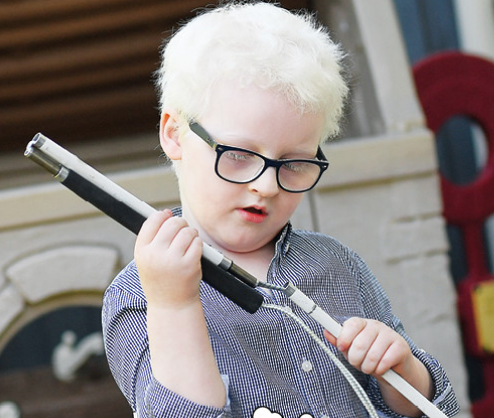
When you have a preferred list of 2 or 3 schools the year before your child is due to enrol, arrange an appointment with the Principal to discuss how the school plans to accommodate your child’s low vision. You will quickly get a feel for whether they are prepared to make accommodations or not – go with your “gut instinct”.
If a school has recently had another child with low vision, this may also mean they already have a greater understanding of what is required. Speak to parents of children who attend the school to find out how they find the school, but do consider this may not be reliable and will depend on the type of child (quiet, extroverted, confident, nervous etc) and the parental expectations. During the process of selection, speak positively about all the visited schools in front of your child (even if you have reservations), as this will help build their confidence in the transition to school, especially if you do not get into your first choice.
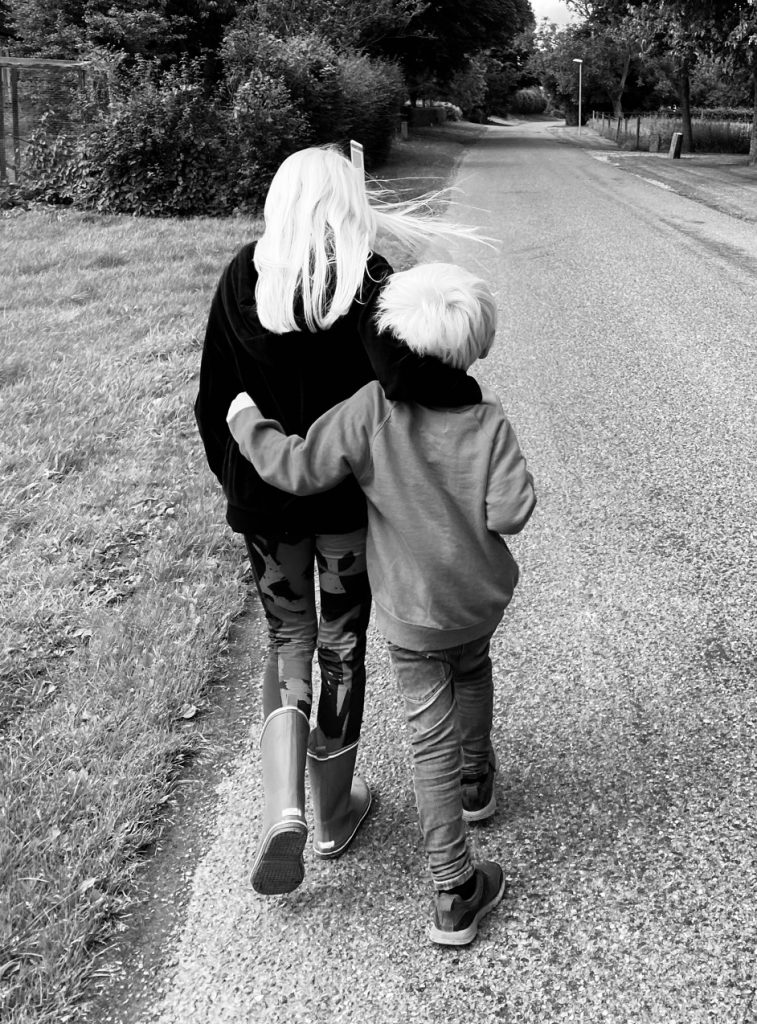
Some parents find that it is a great advantage for their child to attend the closest school, as this means that classmates may live quite close. Developing friendships both inside and outside school is very important, but this can be difficult for children with low vision as they miss many social cues, meaning they can misinterpret actions and find it hard to make genuine friends. If friends live close by, it is easier for our kids to walk down the street or to the next block as they get older, but can be more complicated if they have to rely on public transport or an adult to drive them to see friends after school or at weekends.
Orientation the term before beginning school
Once your child has been accepted to a school, you will be advised of their Orientation Program that all children will attend. Organise a meeting with the person responsible for special provision for children with a disability – this may be an Assistant Principal or a Student Welfare Co-ordinator. This person will let you know what testing or assessments need to be completed for your child to meet their eligibility requirements and be accepted into any support program within the school. If they have already had support at kindergarten, transfer of information will generally take place at orientation.
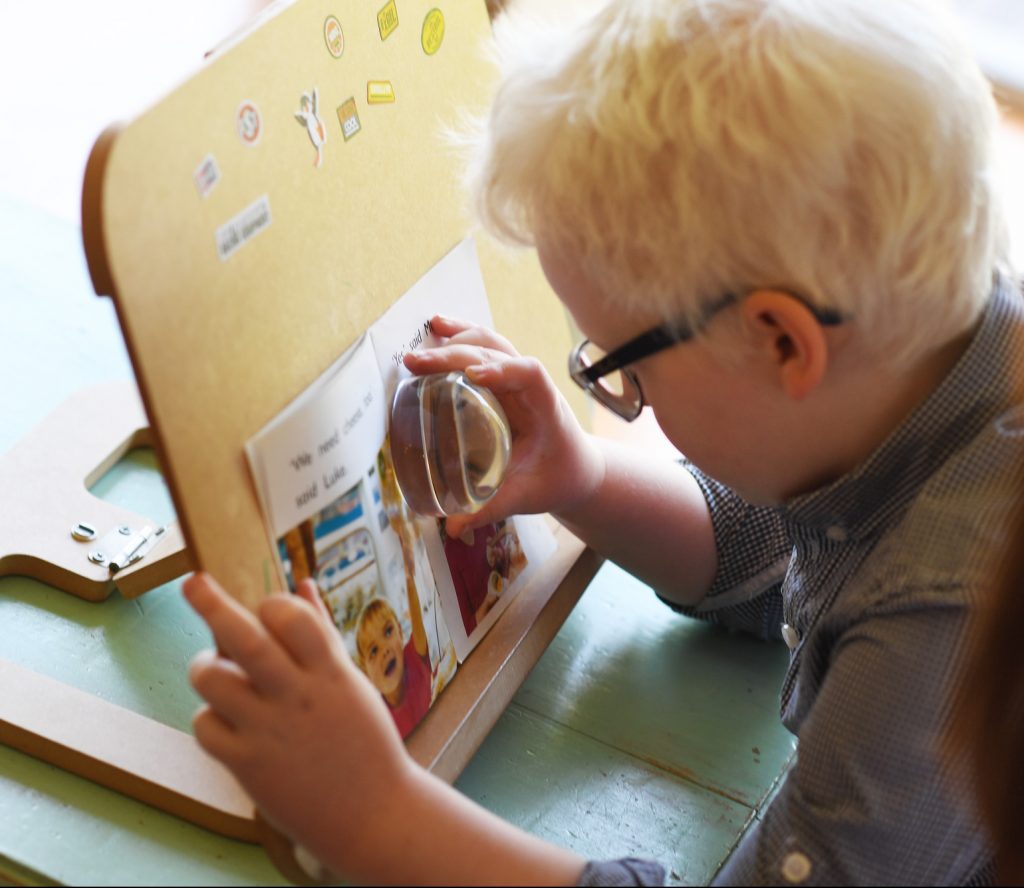
It is important that the school understands the implication of low vision, but it’s also important to understand that your child may be one of many with varying disabilities (all with different needs) in this school. If you can provide the school with a one page document outlining albinism, functional vision and general accommodation requirements, the school will appreciate having something definite that they can pass on to relevant staff as an introduction (see below under “Resources”).
Discuss what opportunities exist for any additional individual visits by your child or any special preparation needed for low vision accommodations. Most education departments in Australia have agreements with NDIS providers to attend the school the year prior, to conduct an environmental assessment.
This will identify any potential safety issues and provide a report on how the school can meet student needs. This may include blinds in the classroom to reduce glare for a photophobic child, or line markings on steps and raised edges/drop offs, “high-vis” paint or tape on poles and other obstructions in the classroom or grounds. Funds for this are available to all schools in order to meet disability standards.
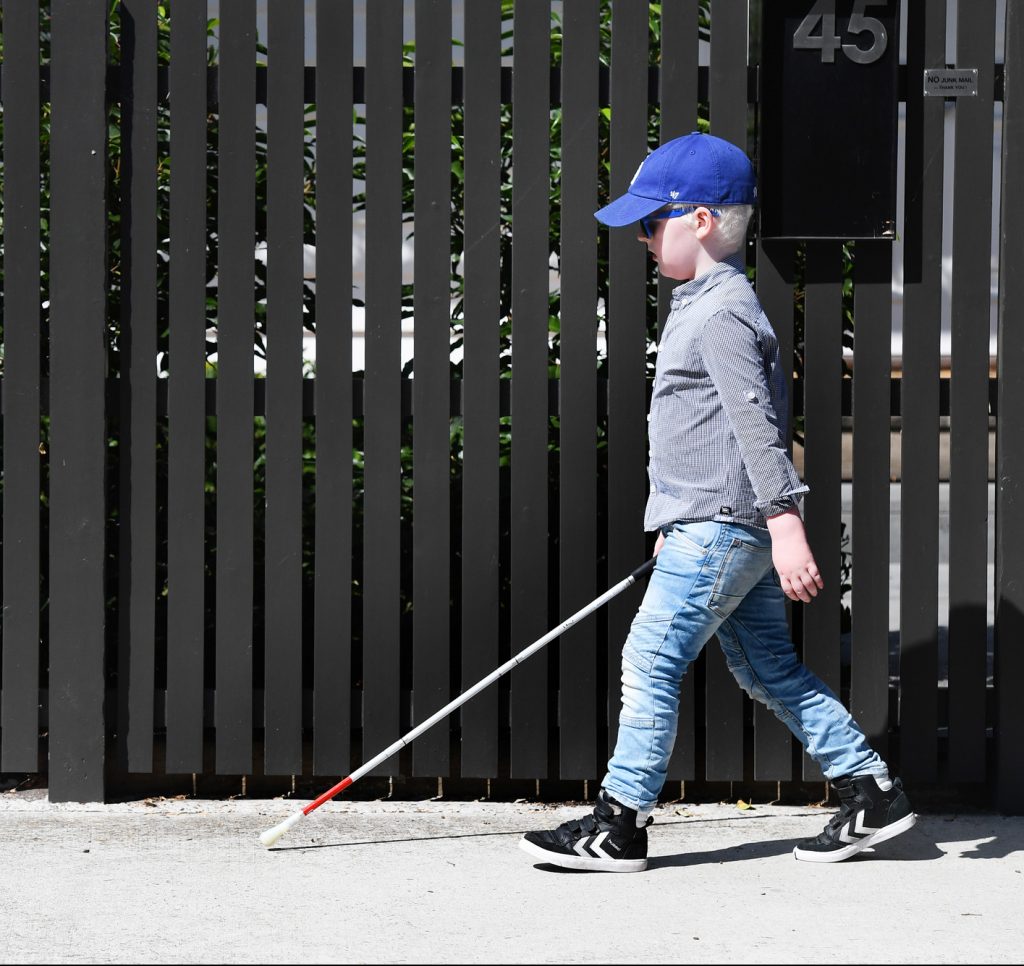
Additional visits by the child to become familiar with the layout of rooms or buildings and how to move safely around the grounds, especially if the child is accompanied by an O&M instructor, builds knowledge and confidence. The instructor may also assist your child in planning and navigating the route to school, especially if public transport is to be used. Further visits during the summer holidays with parents if possible is also helpful – especially if playgrounds are open to the public, perhaps take a friend to share the experience.
Ask if the classroom teacher will allow your child early access day one (or the day before) so they can learn the layout of their classroom. They can find where the teacher’s desk, bookcase and their own table are located, where to put their bag and drink bottle and how other furniture is placed, all without the embarassment or anxiety of having to learn it in a crowded, noisy environment.
- Parents’ Guide to School (PDF) An AFA produced document. Have high expectations for your child, use the support of available services and form a partnership with the school.
Starting School
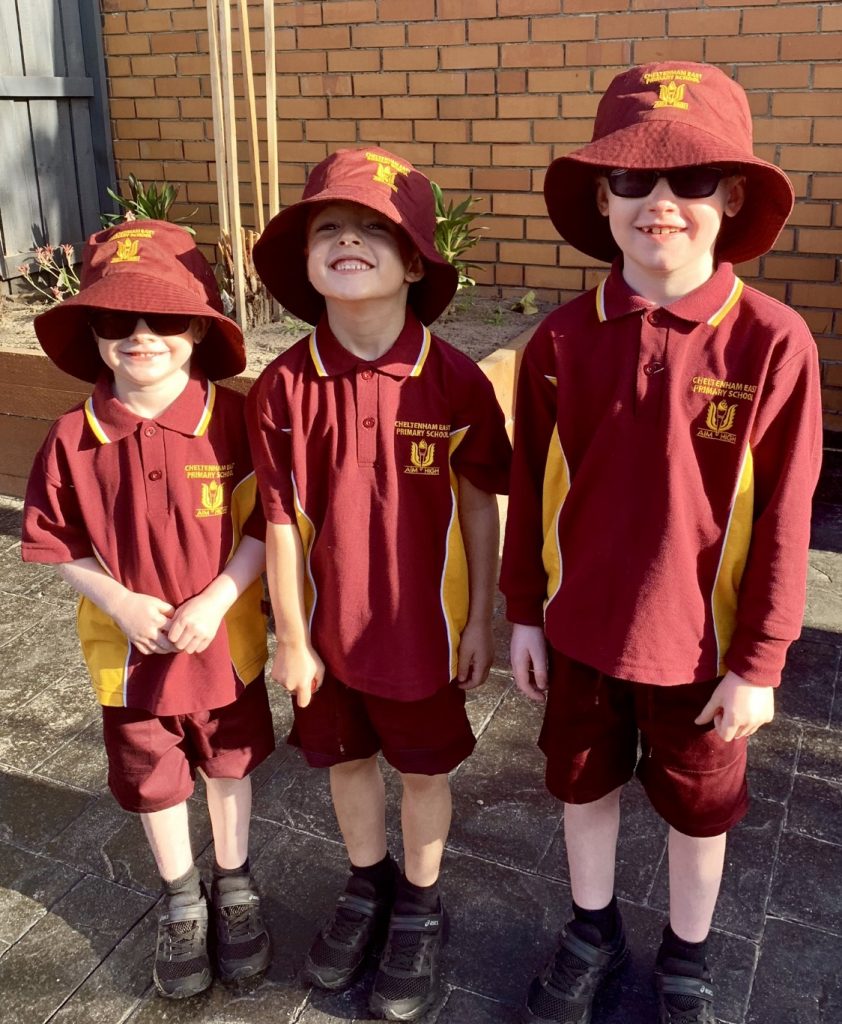
Try to get into a “school routine” prior to starting, with regular meal times (perhaps cut lunches) and early bed times. Use the information from the school Orientation Day to remind your child about the routine for the first day. Prepare a letter (as if from your child) to introduce them to the class teacher and drop it into the school office for the class teacher the day before school starts (teachers usually work that day).
Arrange to have a meeting with the teacher and any assistants in week 2 or 3 for the first Student Support Group Meeting (SSG or similar name in other states), giving the staff the chance to get to know your child beforehand. Most teachers will have the support of a teaching assistant (SSO, aide etc) for the preparation of any enlargement of work or for safety on excursions, but as mentioned, generally only children with visual acuity reading greater than 6/60 will qualify for specific individual assistant time, if required.
A visiting teacher trained in low vision, will meet with the child and the teacher in the first few weeks to discuss how accommodations will be made. They will be involved in the SSG with you and associated teaching staff, to develop an individual learning plan (ILP, IEP or similar) with initial goals to be achieved. This visiting teacher will generally work with the child on the Expanded Core Curriculum (ECC) for low vision, teaching them the skills required to enable them to work alongside peers in the classroom.
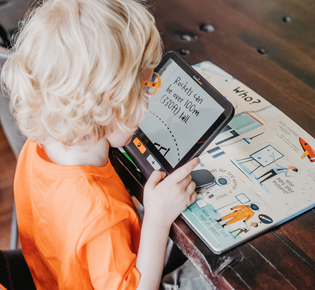
In their starting year, most children come home tired in the first few weeks as they get used to the routine of school. This can be even more difficult for the low vision child as they struggle to see what is happening in a constantly moving and sometimes noisy, new environment. Allow for quiet time after school so that they can unwind and re-energise (or even have a nap or simply rest their eyes).
Get to know the parents of children your child mentions in order to set up informal play dates, as this will give them a chance to get to know each other away from the distractions of school. You will find further information on the first year of school in the resources below.
- Sample Letter to introduce your child to Prep class – the first year of school.(pdf): an AFA member document designed as if written by the child to be given to the class teacher at orientation and at the start of the year.
- For teachers – The first year of school – Working with a student who has Albinism (PDF) This one page AFA produced document can be given to the school and teachers at Orientation and then again to the child’s classroom teacher, any specialist teachers and welfare staff at the beginning of the school year. It can also be placed in the Itinerant, Relief or Replacement teachers’ folder for use when their regular teacher is absent.
- PE and Sport participation in Primary (PDF) An AFA produced document.
- To todays teachers part 1 by Blonde Whimsy. This article is from 2012 but is still relevent to introduce teachers to the basics of albinism.
The second year and beyond
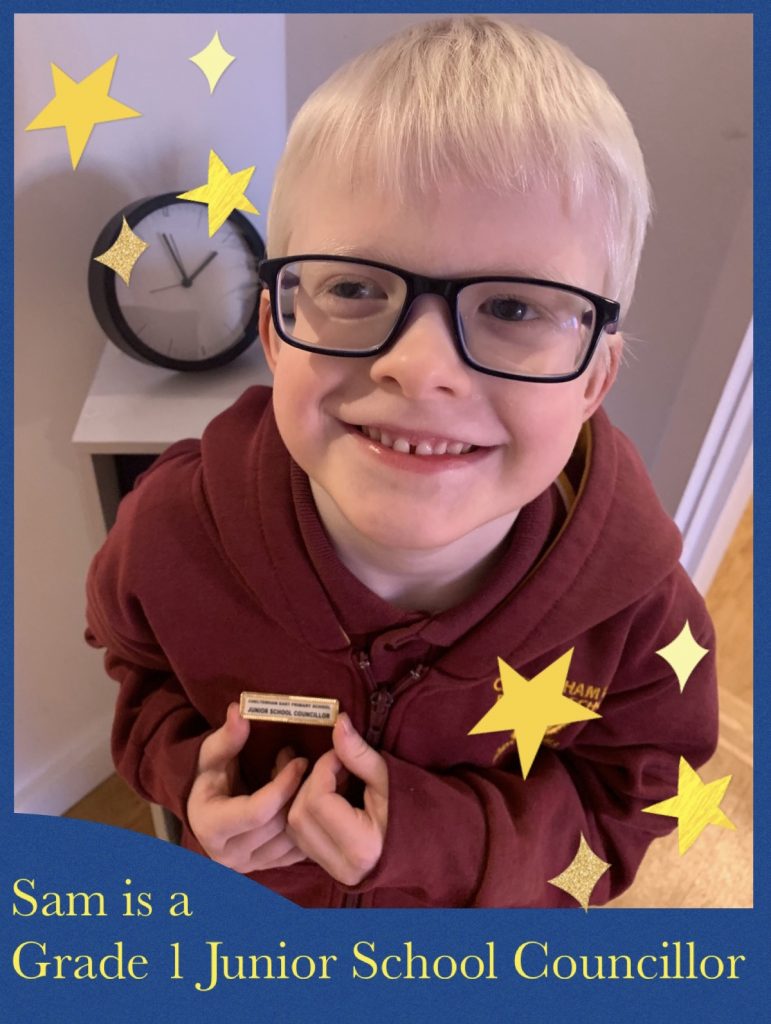
Each year the individual learning plan (ILP, IEP etc) will build on skills and knowledge from the previous year in both the general curriculum and the Expanded Core Curriculum (ECC which works on additional skills specific to low vision).
Students will rarely have the same teacher each year, and if the class allocation is not finalised before the school break, you may not have a chance to meet with the new teacher until the following year. With any change of teacher, be prepared to supply basic information again and then follow up when the teacher has had a chance to get to know your child.
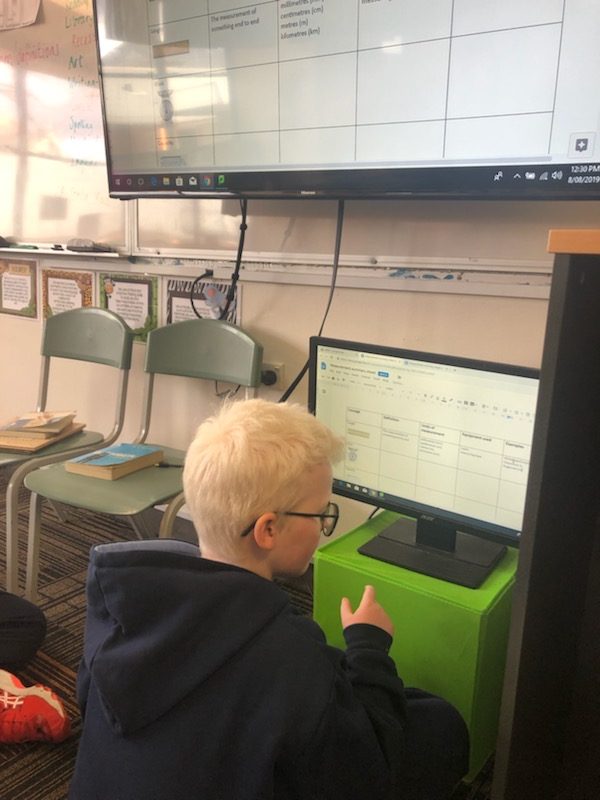
With each year your child will become more confident in using any assistive technology and will catch up with peers where some skills have been slower to develop.
Note though, that unless there is another condition present, your child should be learning, developing and excelling as required. Albinism in no way compromises the intellect nor the ability to learn and retain information. Albinism affects vision and skin only. There will be some allowances for vision, but most children with albinism are fiercely independent and would prefer to “pretend” good vision than to seem slower than their peers.
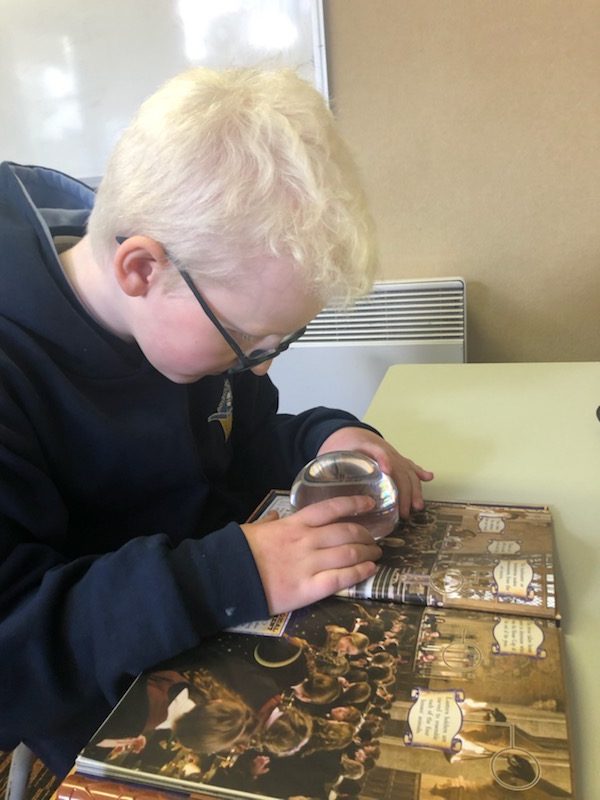
Any early support at this time should work towards independence, so that they work more competently alongside peers each year with reduced extra support. As they progress through primary school their self-advocacy should also develop, with your child taking part in decisions about their education and accessibility.
Encourage them to be involved in extra activities that the school or community provides, including sports, clubs (eg chess or robotics, book clubs) and any leadership opportunities (student councils, class or house representatives etc).
The development of social skills, advocacy and resilience is important, including knowing how to talk about their disability and combat insensitive comments that others may make – hopefully learning to do so with understanding and humour. Support for this can be sought from a psychologist experienced in the area, either through the school or an NDIS provider. Further resources for personal development and resilience can be found on this site under the “For Parents” tab.
Information on transition to secondary school can be found under the next section – “Secondary Years”.
- Primary Teacher introduction to working with the child who has albinism (PDF) This AFA produced document contains a little more information than at the first year level, introducing a new teacher to albinism and including some strategies to support your child in the first few weeks.
- Mid Primary teacher – Introduction to accommodations for Albinism (PDF) This AFA produced version of the Primary Teacher Guide is slightly adapted to suit grades 3 and 4.
- Upper-Primary teacher – Introduction to accommodations for albinism (PDF) This AFA produced version of the Primary Teacher Guide is slightly adapted to suit grades 5 and 6.
- To todays teachers part 2 by Blonde Whimsy. This 2012 article is still relevant today. What to expect and how you can help.
Resources for multiple year levels
- Understanding Students with Albinism – additional advice for classroom teachers and assistants (PDF) This AFA produced document with more detail on albinism and possible accommodations to support your child can be given to teachers after they have settled in to the class.
- General Advice for Teachers and parents (PDF) This AFA produced document covers preparation for school but is also useful for all year levels as it introduces the Expanded Core Curriculum (ECC) and individual learning plans.
- Teacher Checklist for Students with Near Normal Vision – visual acuity 6/12 to 6/18. (pdf) by Probert and Skinner, Visiting Teachers for Vision Impaired (Vic)
- Music for Children, Teens and Beyond (pdf) by PWA member Dr Barbara Williams PhD (in muisc).
- Sun Protection Statement from the AFA (PDF) – helping you to explain the needs of your child in the playground or for the school to submit with funding applications for resources.
- Steps to Success – Privately Happy and Publicly Useful: Annette Godfrey-Magee (SVRC staff – presenting at the AFA Conference 2017). The journey through the school years (P-12), identifying skills and behaviours to be achieved at each level by the low vision student.
- Student Support Group Guidelines – this is a Victorian document, but gives a good outline for the conduct of meetings between parents/teachers/students for setting goals and reporting on progress for Individual Learning Plans. (Terminology may differ from state to state)
- “Can you see this?” This pdf article in “Paths to Literacy” (Perkins School for the Blind, US) by Laurie Hudson, gives teachers (and parents) a guide to the questions to ask in order to discover exactly what the child sees.
- Victorian Booklet: “Educational support for children with low vision” (pdf) – this booklet comes from the SVRC with permission to reproduce. Information on vision, vision measurement, influences on learning and support for education.
- Working with your child’s school and teachers – from the Australian Government’s education site:
– Parental Engagement
– Effective Consultation - Ten ways to promote the natural genius in your child (PDF) – Andrew Fuller
- Promoting conversation with your child: An interesting collection of conversation starters.
- South Pacific Educators of Vision Impaired (SPEVI) – the SPEVI website serves as a portal, linking people (including parents) to information in the related fields of education, disability and vision impairment.
- NOAH (National (US) Organisation for Albinism and Hypopigmentation) This is an American site and while it has information specifically geared for that country, it is a good reference for families and teachers.
Information for Educators
NOAH school Kit
 Join us on Facebook